„Approaching Bach’s music has always filled me with a sense of trepidation. Completely untouchable on the one hand and irresistibly inviting at the same time. Bach reserved some of the most spiritually moving music for the alto voice, sung either by exceptionally talented boys, or by adult falsettists, countertenors, of which I am one,” says Barnaby Smith proudly in the opening of one of his LIVE from London concerts, and with great enthusiasm, even a sense of satisfaction from his work he continues: „Some theologians have gone as far as to say that the alto voice in Bach’s music symbolizes the Holy Spirit.“ Barnaby, a multitalented countertenor, conductor, artistic director and producer of the internationally renowned ensemble VOCES8 and the VOCES8 Foundation, confirms for us today: „VOCES8 is the No. 1 streamed classical vocal ensemble in the world.“

Credit Andy Staples
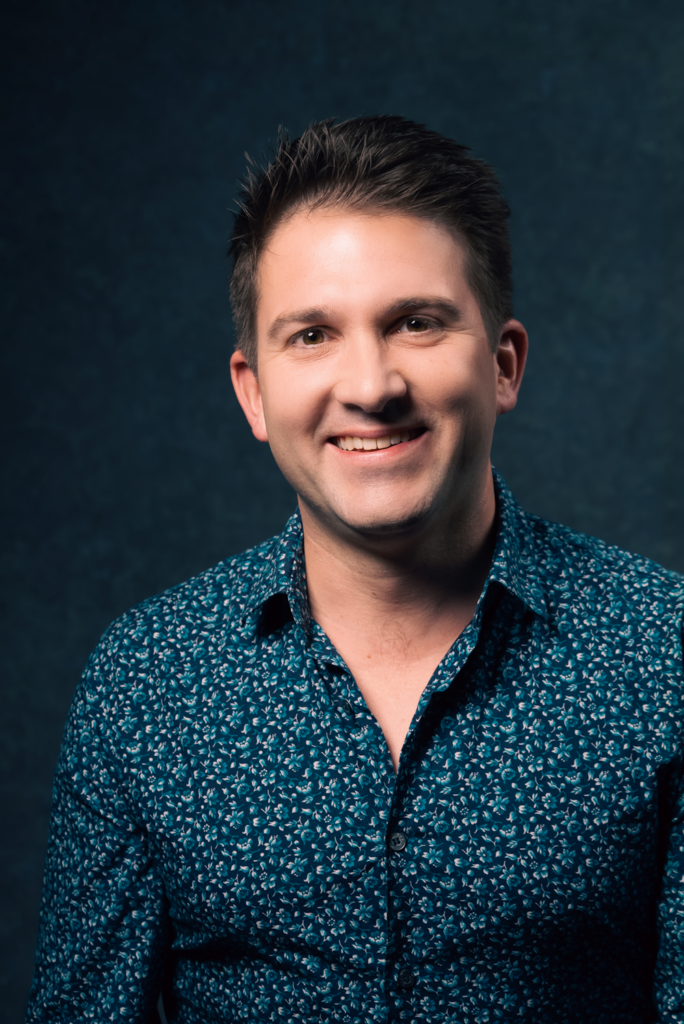
Barnaby Smith. Credit Andy Staples
We can hear your voice with The Illyria Consort in the solo recordings of Händel’s and Bach’s music. How do you find time to perform and record as a soloist when you are so busy with VOCES8?
I do a little bit of solo singing here and there. Obviously, I don’t have very much availability, because I’m always with VOCES8, and when I’m not doing that, I’m conducting, or doing something else. But it is very nice. I try to do one or two recitals a year, if I can. I stopped singing solo properly when I was so young, that I had never made a recording. So when I was going to have a child, I thought, this could be the beginning of the end. Maybe, before I have a child, I should just record something. I did the Händel solo album also because of Covid-19, as I had nothing better to do. I called up my mates I went to college with and said: „Come on down to the VOCES8 Centre, let’s do some stuff.“ I’m good friends with Bojan Čičić, a wonderful Baroque violinist. He leads the Academy of Ancient Music, which is how I specifically first met him. The Illyria Consort is his own group and he handpicks the best players, so this is why we work with them. Originally, it was supposed to be four tracks. We recorded them and they were really nice. So we thought, oh, you know what, let’s make it into an album. And that sprung up the second part of my output to my career.
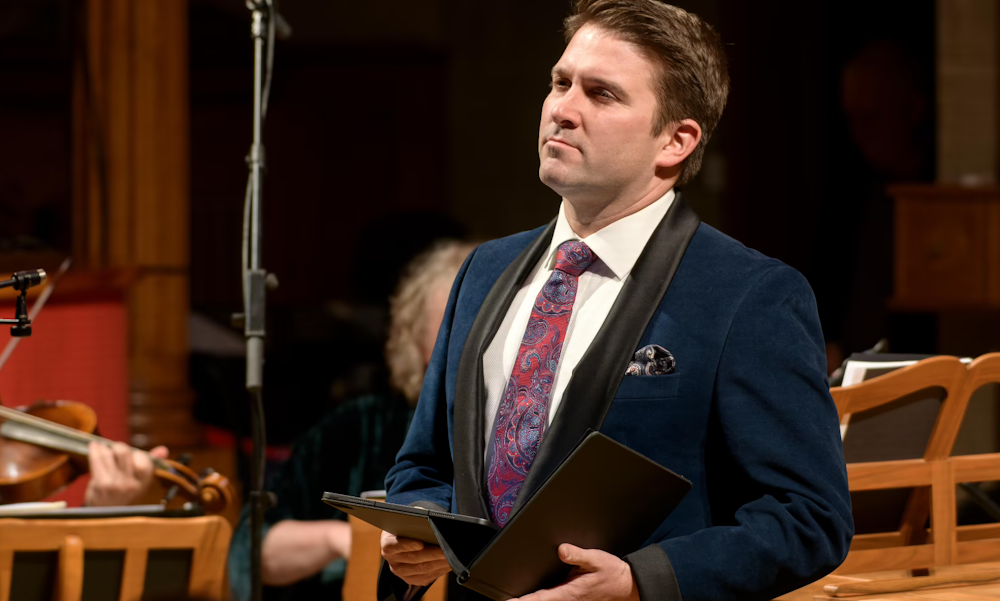
Barnaby at the festival Bach de Lausanne in 2024 in Switzerland. Credit Daniel Muster
Surprisingly, Barnaby, I don’t remember you singing a solo in VOCES8 concerts, isn’t it a pity?
Occasionally, I have solos. Let’s see in the concert that we do for you in Ostrava, there will be maybe two or three moments where I have. Being a countertenor, my voice quality and the aesthetic of it, has great strengths in certain areas, but is also not so ideal in other areas. And in VOCES8, a lot of the solo stuff tends to be in the jazz and pop material, where the countertenor voice is not so useful. Singing as a solo singer and singing in an ensemble are slightly different disciplines. I’m trained as a solo singer, and actually, that’s how I started. I started VOCES8 while I was doing my postgraduate studies in solo singing, and the ensemble was on the side of it. When I left college, I actually did three professional opera contracts in big European houses. But I don’t really like that. I don’t enjoy standing in the middle of a massive stage, singing an aria and expecting everybody to accompany me. Basically, I just don’t enjoy that as much as I do chamber music.
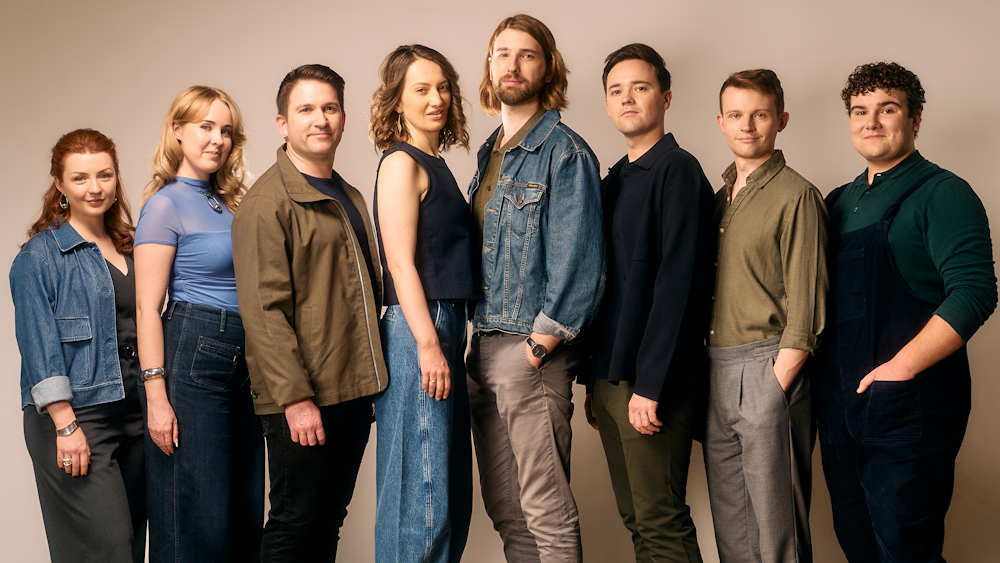
VOCES8 singers (from left to right): Eleonora Poignant, Savannah Porter, Barnaby Smith, Katie Jeffries-Harris, Blake Morgan, Euan Williamson, Chris Moore, and Dominic Carver. Credit Andy Staples
In what ways are solo singing and singing in ensembles like VOCES8 different?
The actual style of singing in VOCES8 has many similarities. A good VOCES8 member has a brilliant singing technique which would benefit them for solo singing as well. But in VOCES8, this is just the starting point to explore many different uses of the voice.
How did you become a countertenor? And should I rather say alto as this is written in your concert programmes?
That’s the thing, isn’t it? I would say countertenor is my voice type, my “fach”, but alto is the line of choral music that I sing. Alto is the choral part that I perform as a countertenor. So, normally, the alto part is either sung by mezzo-soprano, or countertenor, if that makes sense. People think alto is a voice type, and it’s not specifically. In choral music, of course, people identify themselves as being altos, and normally they are mezzo-sopranos, to be honest.
How does a singer become a countertenor? What is involved in the training of the voice?
I think that countertenors start best just through imitation. Every man has a falsetto. They use it every day in their lives without realizing it. I think we have to accept that it’s fake. There’s nothing wrong with that. A lady, for example, puts on make-up every day to appeal to her aesthetic. It’s fake. We have it all over society. Falsetto is just part of that. For young singers, the best way to start is to naturally imitate. The most important thing is also that they want to be making that sound. Once you get to that point, then it’s just a case of beginning to understand the best ways to allow the instrument to work, to set up the instrument. I always think about my larynx as a car. There are so many different ways that you can set up a car, whether you’re setting up a car to drive around town at 30 miles per hour, whether you’re setting up a car for a drag race, or your Formula One race, or a rally, whatever it is. To use the voice, it’s generally all set up. We do it when we speak. All day, every day, we speak in really different ways, we do things with our speaking voice.
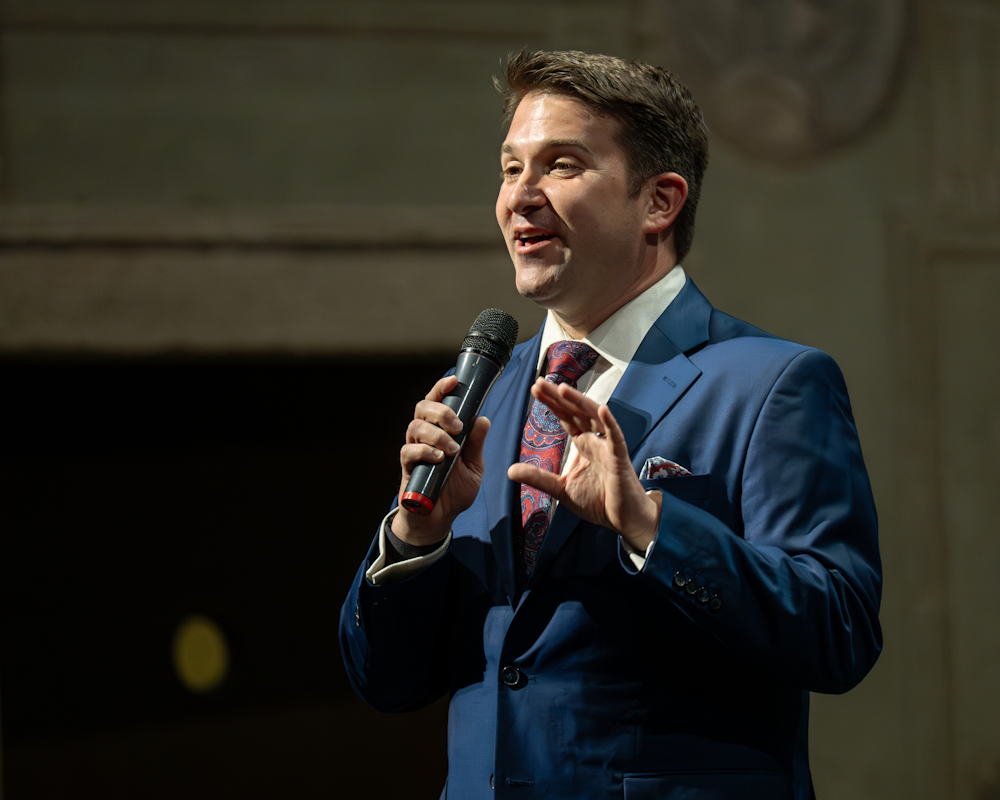
Barnaby Smith at the VOCES8 concert in the Church of Saints Simon and Jude, Prague, organized by The Prague Symphony Orchestra FOK in April 2025. Credit Petr Dyrc
Can you tell us about your personal journey and your start as a chorister at Westminster Abbey?
I still probably think that the five years I spent at Westminster Abbey were the five happiest years of my life, because it was filled every day either with music, or messing around with your friends. I mean it literally. You are at boarding school. We were seven or eight years old, I turned eight when I started, and it’s not easy leaving home at that age, but once you get over the hump of leaving home quite young, there’s so much there to excite you. If you enjoy singing, then it’s great. You live with your best friends, you make music for three or four hours a day, and then you go and play football. And then you mess around in class like you would in any school. And it was just brilliant. Not a care in the world, really.
Part of that was singing with adult singers. And of course, there were countertenors at Westminster Abbey, and I do remember always having a view of the countertenors as to whether I liked or didn’t like them. I particularly liked one, two I particularly didn’t, and one I didn’t mind. And I still remember that today, so it obviously had an influence on me. It’s quite interesting that when I listen back to the recordings of me as a treble, I’m already making a very oboe-y, falsetto quality sound. So my ear was obviously already picking up that.
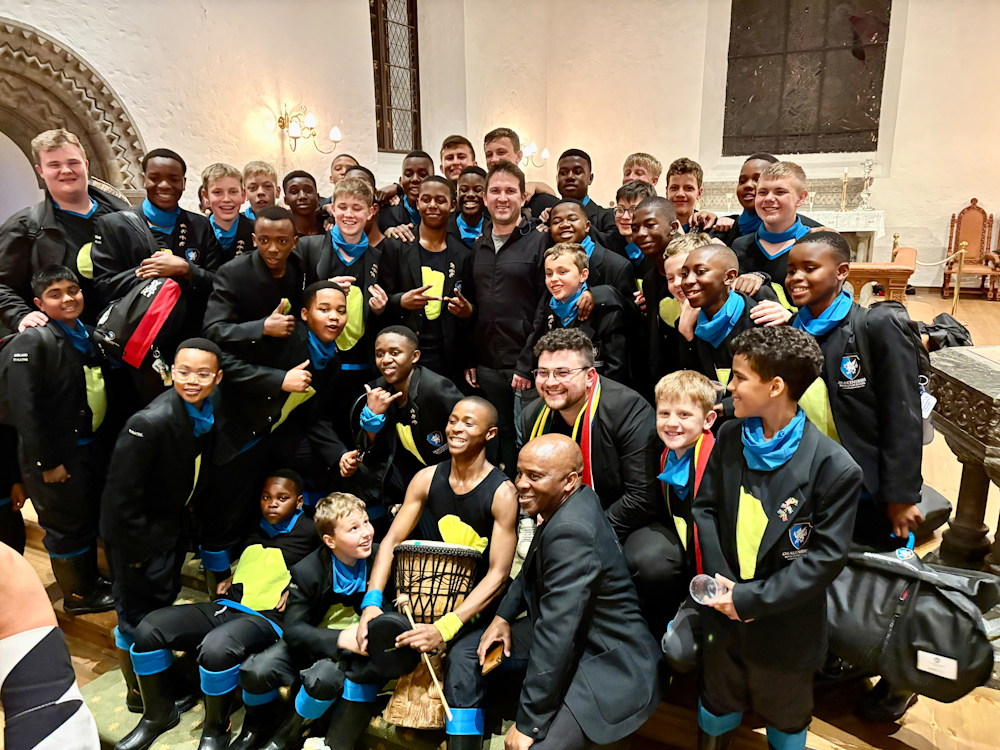
Barnaby meeting the boys from Drakensberg Boys‘ Choir (South Africa) in Bergen, Norway, in 2025. Credit Libby Percival
What happened after you left Westminster Abbey?
You leave Westminster Abbey when you’re 13. Every boy leaves then, and you go to your next school. I was still a treble at that point, my voice hadn’t changed. I sang all of the treble solos at my first Christmas, the famous solos like Once in Royal David’s City and In the Bleak Midwinter, in a school carol service. And all the boys, who I played football with, laughed at me, basically. So over the Christmas holidays, this really sat with me. I came back into school in January, and I faked to my teacher that my voice had changed. And I remember him giving me this voice test, asking me to sing scales, and I still remember working out where I should crack in the scale, as I was singing. So the teacher said, okay, you should go and sing alto. He put me into the alto section for the next two years. I assumed that by the time I was 15, my voice must have changed. And then it changed, and suddenly, I couldn’t sing a single note. But I didn’t want to go and sing one octave lower. I didn’t want to go and sing as a baritone. So I kept singing alto for about six months, and then I just couldn’t sing anything.
That must have been terribly frustrating.
Yes, it was. When at Westminster Abbey, they don’t really let you do commercial projects. But when I left, I had a couple of quite famous recordings with The Abbey Choir and I got offered a lot of commercial recording work. I had a 6-month period when I was recording TV adverts, film scores and all this. I was making quite a lot of money. And I was so annoyed with myself that I’d given up these two years of singing treble! Not just for the money, but also for the enjoyment, of course.
When I was 16, apparently, I came back after summer holidays and I could just remember singing this falsetto. Obviously, I had grown over the summer, and suddenly, I had this voice. My teachers were like “What the hell has happened to you?“ Up until that point, I thought I might go into business management. Another career I was looking at was cricket. I used to play junior county cricket, when I was younger, which is like junior professional cricket. I was very into sport, I loved playing sports. The moment I had the option to be a singer again, bang! That was it. That was all I wanted to do. The same day this happened, my teacher gave me a new CD, a new Decca release of Andreas Scholl. And I listened to it, and that decided. Andreas was my teacher at Schola Cantorum Basiliensis in the end, and still to this day, I absolutely idolize him. Sometimes he turns up at a concert, because he and his family are fans of VOCES8.
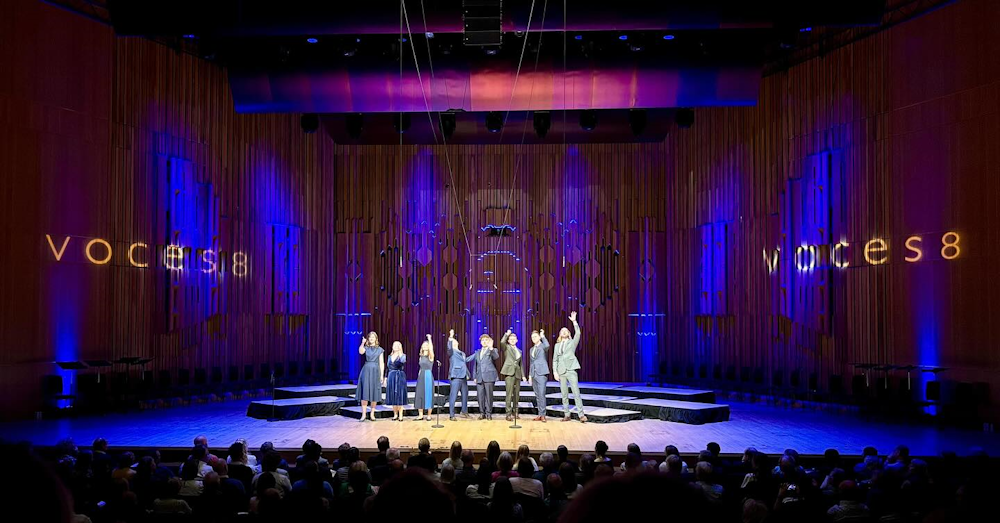
VOCES8 in the Barbican Hall, London, June 8, 2025. Credit Andrew Wilkinson
Last year VOCES8 celebrated its 20th anniversary. What were some of the highlights of your 20-year- long career with the ensemble?
The highlight was definitely the 20th anniversary concert we did in the Barbican Centre, in London’s major concert hall. It was sold out and we had people coming from all over the world. All of our former colleagues came and sang with us. This was a lovely thing. Katie Jeffries-Harris, who sings alto next to me, is my best friend in VOCES8. While we were on the stage, VOCES8 was taking its final bow, she just turned round to me and said, „We are here because of you.“ I will never forget that.
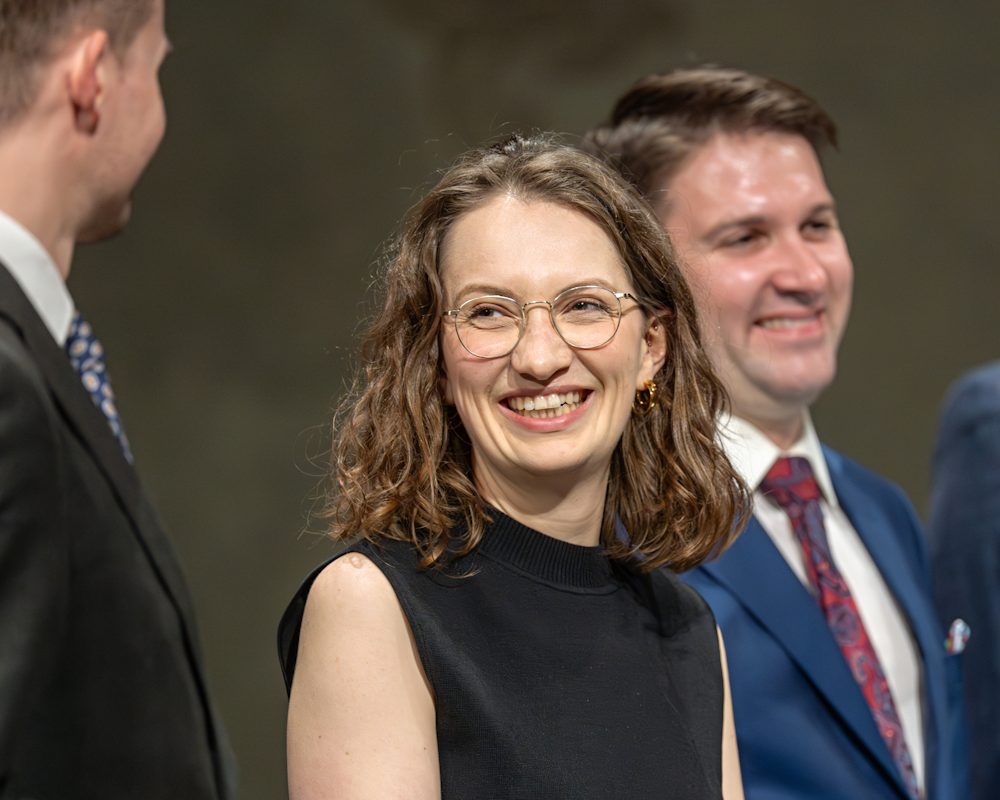
Katie Jeffries-Harris singing next to Barnaby in Prague. Credit Petr Dyrc
Are there any „downsides“ to the VOCES8 career?
There are always downsides. One of the hard things for VOCES8 now is that the group has a brand and an image, and we are no longer able to do what we feel like. There are 1000 people at a concert, and probably 750 of them have turned up for a specific reason. And that is because they know VOCES8 for singing X, Y, or Z, and they expect a sound. That can be a challenge. There’s a sense of having to maintain that brand. It’s like when you have a house. We always drive, drive, drive to achieve these things. Now we’ve got it, it’s amazing to have it, but there’s maintenance required. And so I think that plays heavily these days into what we do. I’m sitting, making the next video because everybody is there, sitting, waiting for the next video.
We’ve reached 20 years and we are, if you look at all the metrics, successful. With success come also difficult things. We are busier than ever. The requirements on us to deliver more work are higher than ever. Nothing I would complain about, but certainly, certainly challenges, and it is within our nature to also want to keep going upwards. When you get high up already, it’s difficult to maintain the same trajectory. So trying to maintain that sense of progression is also one of the challenges.
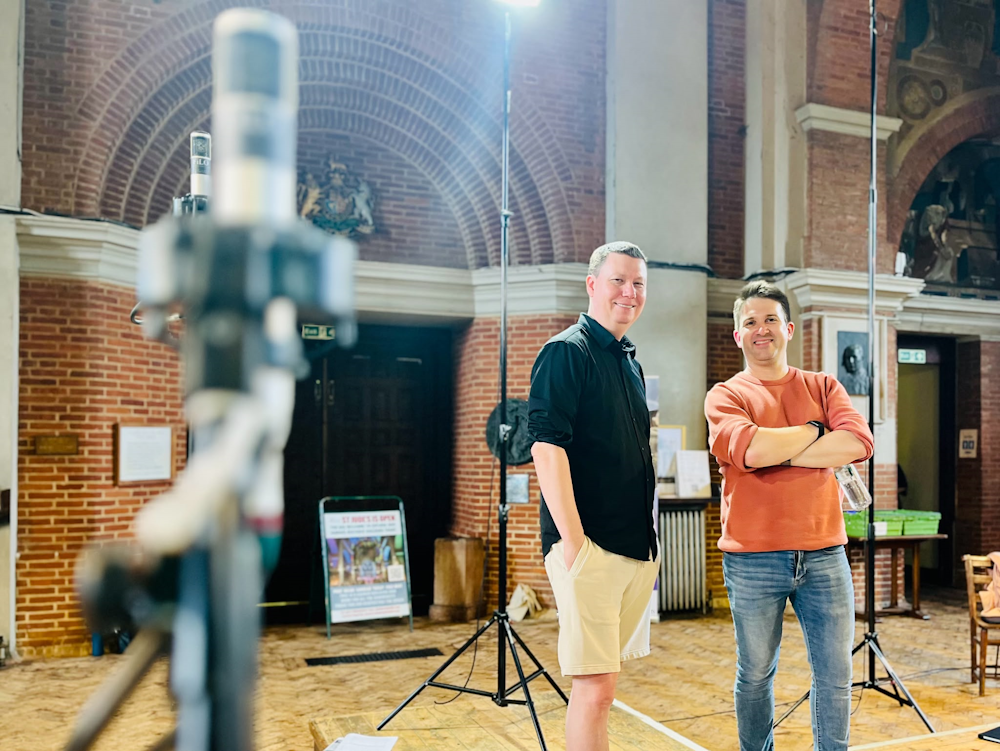
Working with Ola Gjeilo, the first-ever Composer-in-Residence of VOCES8, Barnaby is preparing to conduct the VOCES8 Foundation Choir in a new album of Ola Gjeilo’s works which will be out on Decca early next spring. Credit Libby Percival
When singers leave the ensemble, it probably always means a kind of necessary transformation. Does it require adaptation, a new approach, new repertoire?
When new singers join the group, they have to adjust to what is required. In so many ways. And that is really tricky. It’s not all just about copying Andrea Haines, our former soprano, for example. Actually, I have a lot of respect for Savannah Porter, Andrea’s successor, because obviously she sings brilliantly in her own way, but it doesn’t seem to faze her. Another soprano, Ella Poignant, will soon step down. She loves singing in the group, but finds it too difficult to be away from Sweden. And so a new soprano, a young American girl, Virginia Taylor Grabovsky, starts on the 1st July. She will be singing with us when we visit Ostrava. She’s hugely exciting, an incredible young musician. A lot of rehearsals with the new singers now will not be about asking them to sing better, it will be encouraging them to sing in a way that fits the culture of group sound that has developed. Andrea comes back and works with us, she already produces some of the audio for us now. She sits there with the headphones on and says no, do it again, and she also helps to train our new sopranos.
Probably the thing I find most difficult these days is programming for VOCES8 because you live and die by the quality of your repertoire. Finding new core music that lives up to the quality of what we have been singing in previous seasons is really, really difficult. If you go to hear Paul Simon, you always want to hear Bridge over Troubled Water. I view us there these days more as a pop act in that sense, so I try to program a number of the hits into every concert. But that all is the problem of success. So, all these are, ultimately, nice problems to have.
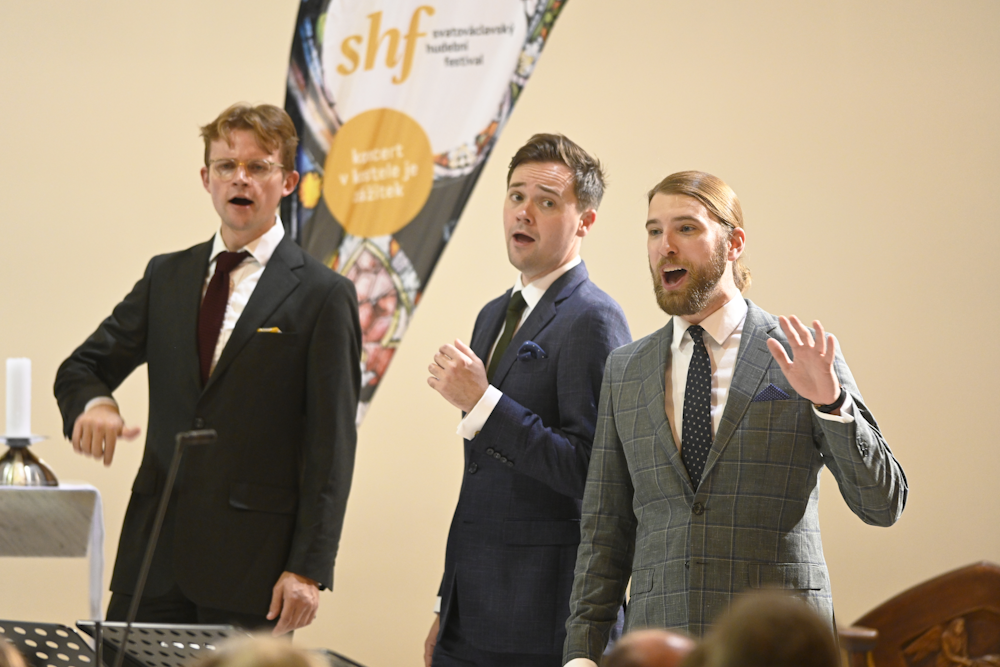
Beginning in the 2026/2027 season, long-standing ensemble member Blake Morgan will transition into a new role as VOCES8 Ambassador and Associate Artist. Barnaby writes about Blake’s extraordinary contribution to VOCES8: „It’s a natural evolution that opens new possibilities both for Blake and for the ensemble.“ Chris Moore, Euan Williamson and Blake Morgan at SHF St. Wenceslas Festival in Ostrava-Pustkovec, September 5, 2024. Credit Ivan Korč
Talking about singers, what other human qualities do VOCES8 singers need?
This job is demanding, because you have to give your whole self to it in so many ways.What you need is humility. That is probably the most important personal trait. Standing on stage and giving your voice requires so much confidence, and that’s why you get so many singers with massive egos, diva tendencies. It is very difficult to find singers who are humble enough to accept that it is not always going to be about them. It’s basically never about you. You’re right, I don’t sing solos, because it’s not right most of the time for me to sing a solo, and I have to be happy with that. And so does everybody else, they have to be happy with their lot. And that’s really, really difficult. It’s the group first rather than the individual first, and that is normally what makes or breaks someone’s success as a member of VOCES8. It’s normally that one thing. Some people come in the group and they stay for quite a long time, but it’s a struggle the whole time they are there. Some people come and they don’t stay long. There’s nothing wrong about having an ego. I have an ego, everyone else has an ego. But it’s about how you manage it.
How difficult is it to find new singers, the people committed enough to make the ensemble the first priority? Are voice, musicianship and human qualities what you are looking for in auditions?
Yes, you are right, we look for the voice, the musician, and the human. And they are three equally important things. Arguably, the voice is last, but the voice is like the gate. There are lots of people we are currently auditioning for tenors. I’ll see 50 tenors in person. Probably 40 of them have a voice that’s good enough. So, that’s just like the first hurdle. Then it’s the musicianship. Probably between five to ten will have musicianship that’s good enough. And then it’s down to who is the best person, and there’s only one who can get it. So, it’s a really, really interesting process. But humility is everything.
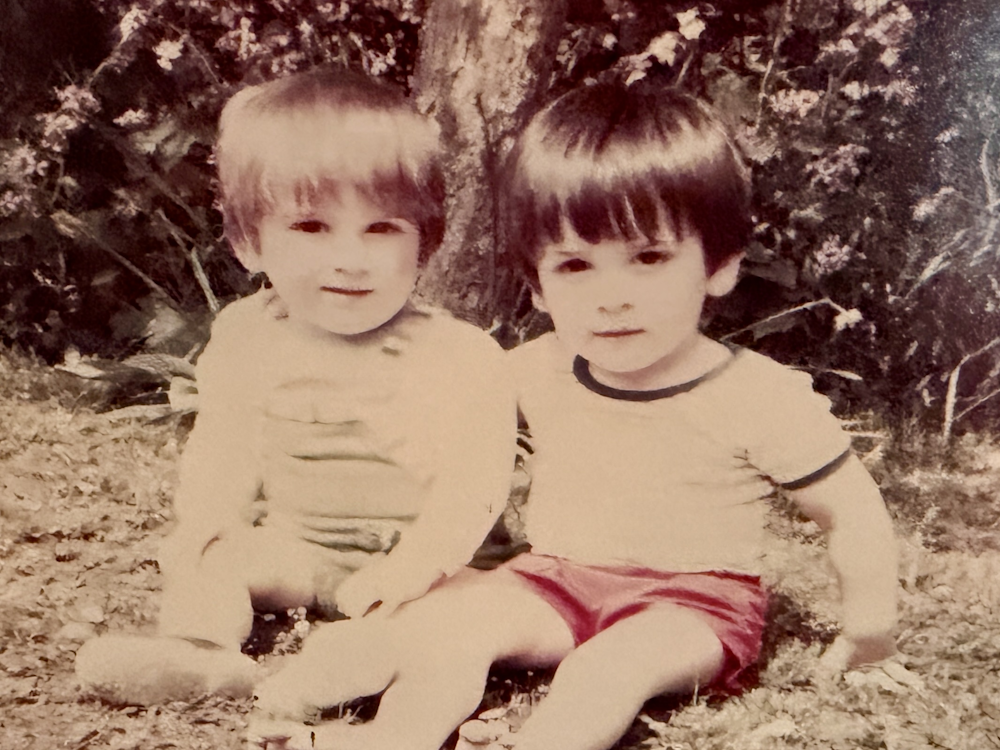
Childhood photo of brothers Barnaby and Paul Smith, future Co-Founders of VOCES8 and the VOCES8 Foundation. Credit Archive Barnaby Smith
How do you manage the wider work of the VOCES8 Foundation? It seems that just your touring is an immense string of concerts and duties.
My day-to-day job is making sure VOCES8 is on stage, doing its 140 gigs a year. But then my wider role is at the VOCES8 Foundation. And I’m the entrepreneur, the artistic leader, so I will have the idea and set something in motion, but then I’m very lucky that I have other people who are on the staff there, who can take that vision and enable it to happen. A big part of that is supporting emerging composers, another part is supporting emerging artists and emerging groups. We are really keen on ways to have Composers-in-Residence, because it is important to create new choir music. We’ve benefited from all the wonderful music that has been composed for us over the years. I’m a big fan of trying to find people who are maybe less well-known, and bringing them to prominence. I think Taylor Scott Davis fits that very well. I love his music because it’s a kind of cross between John Rutter and John Williams. We’ve been very pleased to work with him and support him. I feel like for the first 20 years we’ve been trying to build ourselves up, so now we have this amazing platform, we are here to give back and to lift other people up.
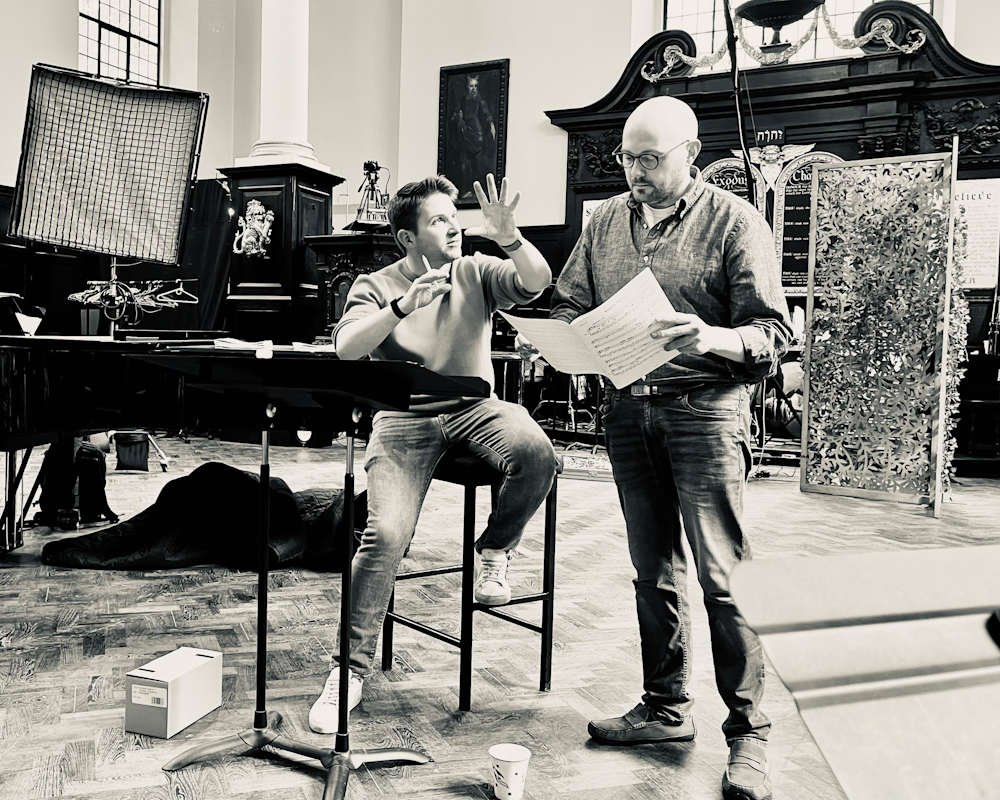
The VOCES8 and VOCES8 Foundation Composer-in-Residence Taylor Scott Davis rehearsing his Requiem with Barnaby, now out on the Decca album „I carry your heart“. Credit Libby Percival
What are some of your favourite pieces you have been recording recently?
Lucy Walker’s Give Me Your Stars? I think that’s going to be one of the new most popular pieces in the choral canon. I’d encourage everybody to take a look at the video or listen to the recording. Try and get hold of a score, it’s very beautifully written. Again, she’s working in this modern watercolour American sound world, but with a little bit more of the Anglican choral tradition plugged into it. The piece has even given the title to the concert programme that we will hear in September in Ostrava.
Do you still remember anything about your last concert in the Church of Saints Cyril and Methodius in Ostrava-Pustkovec?
I quite vividly remember the concert, the venue, and arriving at the venue. And I also remember taking a run in the park. I just remember having a really nice time. It was lovely and we’re excited to come back.
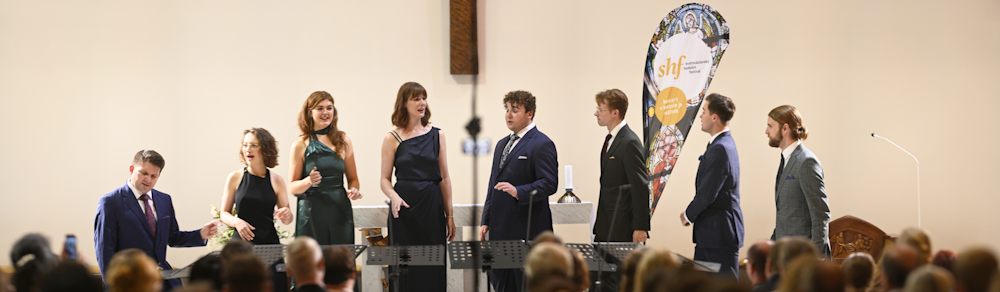
VOCES8 with sopranos Ailsa Campbell and Andrea Haines in the Church of Saints Cyril and Methodius at SHF St. Wenceslas Festival in Ostrava-Pustkovec, September 5, 2024. Credit Ivan Korč
„A concert in a church – what an experience!“ is the motto of SHF St. Wenceslas Music Festival, organised in Moravian-Silesean region of our republic. You must have been in thousands of churches around the world. Do you know how many?
Good question. A lot. We’re lucky. We do 140 concerts a year, and probably half of them are in churches. So, I’ve probably done 2,000? There are just so many! I agree with you when you say everyone should experience a concert in a church, because it’s almost like another world.
Is there anything like an „ideal“ church to sing in?
I would say there are two things that make a good church. One, having a little bit of a dome, because that gives the sound an ethereal loft. The other thing is a long nave because that means the sound travels down the church, which gives the sense of space and acoustic, but it doesn’t bounce back up the church too quickly, which then causes the sound to get very muddled.
And the church closest to your heart?
Westminster Abbey. So, no dome there.
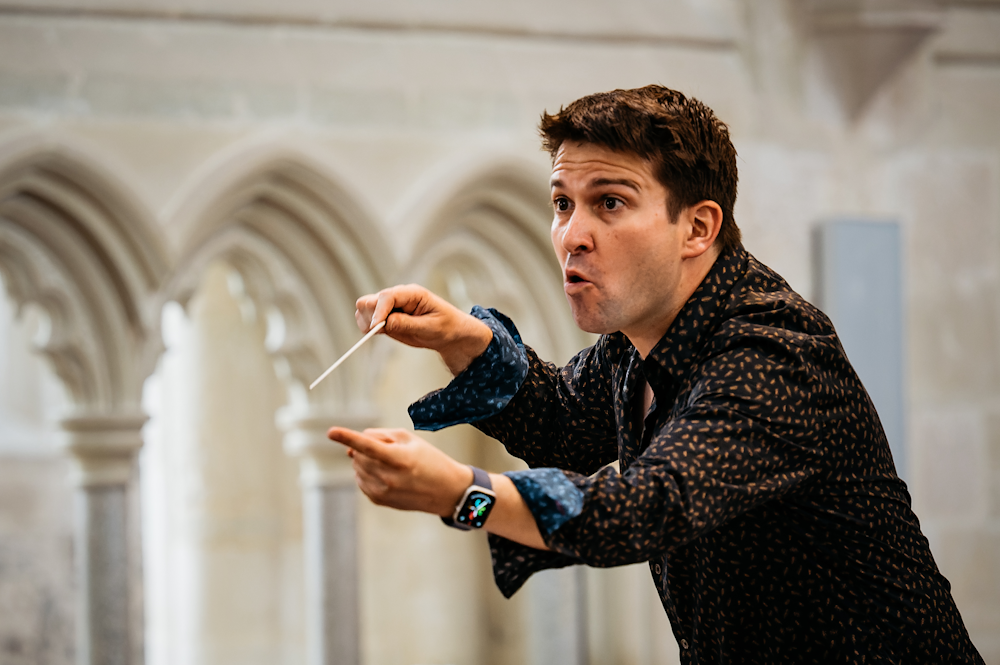
Barnaby Smith conducting. Credit Andrew Wilkinson
What are your artistic dreams after achieving so much? I suppose you still have some that haven’t come true yet.
I think my personal dream is just to lift other people up. There are pieces that you can do, like the St Matthew Passion, all these sorts of things. I am always looking forward to what comes next. And I will enjoy my career and all the opportunities. But really, the biggest thing for me now is to help other people achieve their best. I feel like I have spent 21 years refining our art form, both singing, directing, recording, really refining the skill set and the idiom, and I just like to use that to help other people achieve as well. I think that has been my number one thing. There are so many good people out there who don’t have the opportunity, because they don’t know how to get themselves the opportunity. You’re a parent, so you know you have something inside you which just wants to help your children and lift them up. There are people out there who all they want to do is teach, because they just love seeing other people succeed. That’s about where I am.
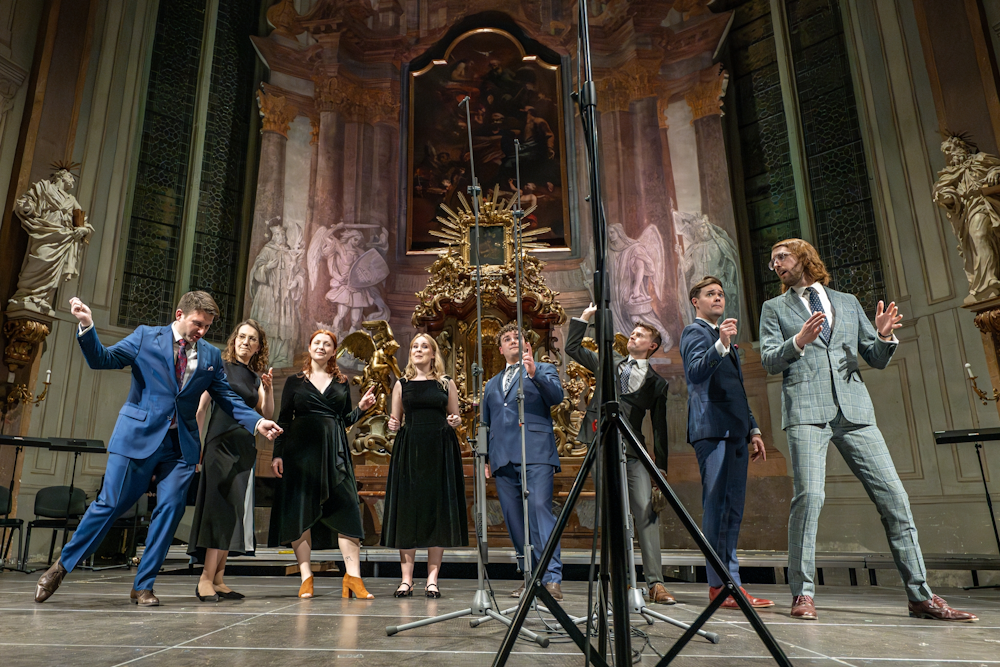
VOCES8 in the Church of Saints Simon and Jude, Prague, in April 2025. Credit Petr Dyrc
BIO
Barnaby Smith is a conductor, countertenor, producer and Artistic Director of the internationally renowned ensemble VOCES8, and the VOCES8 Foundation in the UK and the USA. Together with his brother Paul Smith, a composer, conductor, performer, educator and CEO of the Foundation, Barnaby has been acting as the driving force, leading and initiating the activities of one of the most influential choral platforms of the 21st century. The three main pillars of their programme are global touring with VOCES8, recording, and education. The Foundation’s education programmes now reach tens of thousands of participants annually. A passionate educator, Barnaby has taught and led workshops at universities and academies worldwide. He co-curated the Master’s course in Ensemble Singing at the University of Cambridge, and directs the Milton Abbey International Summer School.
Barnaby creates and directs all of VOCES8’s media output with millions of listeners and viewers around the world. His extensive recordings with major labels include, among others, Decca Classics, Universal, Naxos, and VOCES8 Records. His production work has supported collaborations with ensembles including The Sixteen, Gabrieli Consort, Chanticleer, The King’s Singers, Ringmasters, Lyyra, APOLLO5, and others. The LIVE From London digital festivals, which have been curated and presented by him, have reached audiences in more than 180 countries.
As a conductor, Barnaby has led distinguished choirs and orchestras across the world, from the London Philharmonic and Academy of Ancient Music to major ensembles in Europe, Australia and Asia. Collaborations span composers and artists such as Paul Simon, Jacob Collier, Eric Whitacre, Ola Gjeilo, Jonathan Dove, and Roderick Williams. Recent projects have covered directing the Philharmonia at Abbey Road Studios, and premières of major new works by Christopher Tin and Taylor Scott Davis.
Barnaby began his career as a treble in the Choir of Westminster Abbey, and as a treble soloist appeared on many important occasions. He is an alumnus of the Britten and Pears Young Artists Programme. Barnaby completed his studies in Specialist Early Music Performance at the Schola Cantorum Basiliensis under Andreas Scholl and Ulrich Messthaler. His solo albums of Händel and Bach have received critical acclaim for “refined beauty and sheer skill” (Gramophone, May 2023) of his singing.